Showing posts with label caregivers. Show all posts

Tuesday, 26 September 2023

Caregivers: Unsung Heroes in Assisted Living

In the bustling world of senior care, it’s easy to overlook the silent heroes who work tirelessly behind the scenes. Those modest heroes are none other than caregivers in assisted living communities like ours! Simply put, our unwavering mission to serve seniors from all walks of life succeeds because of our dedicated, accomplished caregiving team. Each person on our team embodies a spirit of commitment, empathy, and knowledge that brighten the lives of each resident. As we delve into the integral role of these unsung heroes, we’ll discover their profound impact on enhancing every senior’s quality of life here at Pitman.

All-encompassing care. Our caregivers are more than just medical professionals; they are companions on each resident’s journey to aging gracefully. From assisting with daily tasks like getting dressed to administering medication and monitoring health conditions, caregivers play a pivotal part in ensuring the health and safety of every resident. Their dedication is evident in how they tailor each service to best suit every senior in their care – ensuring all residents’ needs are met appropriately.

Compassion in action. Empathy is the cornerstone of caregiving here at Pitman. Our caregivers approach each aspect of their work with compassion, treating residents not merely as patients but as cherished members of an extended family. They truly understand how a simple smile, a listening ear, or a high-five can make all the difference in turning a senior’s day around.

Expertise and finding opportunities for enrichment. Assisted living communities thrive on the knowledge of caregivers with specialized training in gerontology and senior care. Their expertise is crucial in managing chronic conditions, preventing health complications, and providing rehabilitative care when necessary. Taking it a step further, our caregivers, in particular, possess an innate ability to spot a recluse senior and devote the extra time to get them more involved within the community. At every turn, our caregivers will gently encourage them to engage in activities that promote mental stimulation and social interaction. This dynamic approach to care helps each resident maintain cognitive function and emotional well-being.

Fostering social connections. Loneliness and social isolation can often be unwelcome companions for seniors. That’s why our caregivers work diligently to create an inclusive environment where residents can cultivate more meaningful connections. As we mentioned above, our team takes the time to ensure every resident gets involved with community life at a pace they feel most comfortable with. From organizing group outings to facilitating clubs and leading exercise classes, caregivers do everything in their power to nurture a vibrant, social, and accepting community. If your loved one is the shy type, don’t worry – with a little patience and persistence, we will help break them out of their shell and find an activity or two they feel comfortable with!

Celebrating the Unsung Heroes: UMC MVPs

As a testament to their remarkable contributions, United Methodist Communities takes a heartfelt initiative to honor caregivers who go above and beyond. The title of “UMC MVP” (Most Valuable Player) is bestowed upon one caregiver each month in each community, to formally recognize their exceptional commitment and service. This gesture not only acknowledges their dedication but also serves as a source of inspiration for their colleagues, fostering a culture of excellence in caregiving. This past month’s UMC MVP at Pitman was none other than our Certified Nursing Assistant (CNA) Courtney Orf!
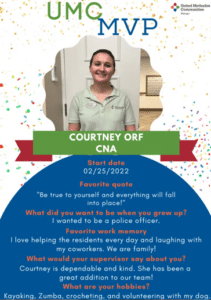
Courtney, as well as the rest of the UMC at Pitman care team, serve as pillars of support for the physical, emotional, and social well-being of the residents they serve. As they navigate the challenges and joys of aging alongside their residents, caregivers create a place that feels like home. Their efforts echo far beyond the walls of the community, leaving a lasting impact on the lives they touch. So, here’s to the caregivers – the unsung heroes who lead the path for our cherished seniors at UMC at Pitman!

To learn more about how our caregivers truly impact the quality of life for seniors in Gloucester County, please give us a call or visit our website at: https://umcommunities.org/pitman/

This blog was originally published at https://umcommunities.org/pitman/blog/caregivers-unsung-heroes-in-assisted-living/

Wednesday, 8 June 2022

The Correct Way to Care for a Senior Recovering from a Stroke

https://umcommunities.org/blog/care-for-a-senior-stroke/

If your senior loved one has had a stroke, it’s essential that they get the right treatment and the proper care during their recovery. Strokes are a very serious and potentially life-threatening medical condition, and if you’ve found yourself becoming a caregiver for your loved one while they recover from a stroke, our team at UMC has put together this helpful guide to assist. Please contact us with any questions.

First Steps for Caregivers

  1. Educate yourself about strokes and stroke recovery. Many people don’t know anything about strokes until someone close to them has one, so a great first step is education. We recommend joining local stroke recovery groups, speaking with the care team at your loved one’s hospital, and reading everything you can about stroke rehabilitation.
  2. Find out what expenses insurance covers. Medicare and most health insurance companies usually cover the majority of expenses for your loved one’s hospitalization and rehabilitation, but you need to verify which hospitals and care providers are included in their coverage.
  3. Understand what level of care your loved one needs, and assess your ability to provide this care. It’s normal to want to care for your loved one yourself, but sometimes their condition requires professional care. It’s okay to ask for help, and it’s okay if you can’t provide the full spectrum of care yourself.

Coming Home After a Stroke

Once your loved one is ready to come home, it’s important to keep these things in mind as they make the transition:

  • You may need to make your home safer. This includes adding grab bars in the bathroom, removing smaller rugs that can be tripping hazards, and ensuring your loved one won’t need to climb any stairs.
  • Be prepared for your loved one to exhibit behavioral changes. Losing mobility and other functions, including drastic changes to their quality of life, can be very difficult for the stroke survivor, and emotions and tensions can run high.
  • Pay attention to any signs of depression. It’s common for stroke survivors to experience depression, and it can unfortunately negatively impact or n hinder their recovery.

Taking Care of Yourself

While it’s wonderful that you’re taking such great care of your loved one as they recover, it’s essential to check in with yourself regularly: Are you burned out? Are you getting enough sleep? How is your mental health? Are you falling behind in other areas of your life? Do you feel emotionally drained? The better you take care of yourself, the better you’ll be able to care for your loved one during their recovery. You may want to check out local stroke recovery support groups, or join online forums where you can share your experiences with people who understand. Don’t put any pressure on yourself to be perfect or to do everything on your own.

Get Help if you Need it

Depending on the severity of your loved one’s stroke, they may require professional care while they recover. Home care assistance is available to ensure your loved one gets the care they need, and to help relieve you from your around-the-clock caregiving duties.

If you have questions about caring for a senior after a stroke, or if you need support, please contact our team at UMC today. Our experienced team of caregivers provide respite care to seniors who are recovering from a stroke, and we will be happy to help.

Original blog posted on https://umcommunities.org/blog/care-for-a-senior-stroke/

Monday, 25 April 2022

How To Tell If Your Senior Parent Needs Help

https://umcommunities.org/blog/how-to-tell-if-your-senior-parent-needs-help/


Many of our senior parents live independently and have healthy and full lives. It’s normal to worry about our parents as they age, and if you suspect your parent might need some help at home, it may be time to have a conversation with them. While senior parents can be notoriously resistant to accepting that they need some help, there may come a point when it’s necessary for their safety, their health, and for the whole family’s peace of mind.

Signs a Senior Needs Help at Home

Our team at UMC has put together this guide to help you determine if your parent may need home care services. Please contact us if you have any questions or need assistance. 

Difficulty Performing Activities of Daily Living

If you notice that your parent is starting to have trouble with daily activities like cooking, getting dressed, showering, using the bathroom, and even getting around from room to room, it may be time to talk to them about home care. People often think that home care is only for people who are seriously ill or incapacitated, but many seniors have home care help for daily activities.

Changes in Physical Function and Appearance

These changes include things like wearing dirty or stained clothing, weight loss from not eating properly or frequently enough, dirty or messy hair, untrimmed nails, a noticeable odor from not showering frequently, and bruises or scratches from falling or bumping into things. Pay close attention to your parent’s physical appearance and overall hygiene when you visit with them because these are often indicators that they are struggling at home. 

Changes in Behavior and Mental Status

If your senior parent has a full social life with many hobbies and interests, be on the lookout for any changes that may indicate their mental health is struggling. Things like failing to return your phone calls and text messages, a loss of interest in their hobbies, and no longer seeing their friends regularly may be red flags. We all go through mental health challenges in our lives and your senior parent may need some help. 

Neglecting Household Responsibilities

Keeping your house running involves a lot of responsibilities: paying the bills, cooking, cleaning, laundry, and keeping up with any other household repairs and maintenance. If you visit your parent’s home and notice anything out of the ordinary, like a pile of dishes in the sink, a stack of unpaid or unopened bills, or that their prescription medications haven’t been refilled, it’s time to have a conversation with them. You’ll need to learn more about what they’re struggling with to identify the areas family and home health aides can assist with.n. 

What happens next?

While it’s never an easy conversation to have, discussing home help with your senior parent is essential for their health, safety, and overall well-being. You can expect them to be resistant to the idea at first, but start the conversation sooner rather than later, and take the time to really listen to your parent and understand their concerns. 

Home health aides can greatly enrich your parent’s quality of life, and you’ll have peace of mind knowing that they are being cared for when you’re not able to be there. Keeping a clean and orderly home, staying on top of prescription medications, and regular assistance with things like shopping and cooking can go a long way in improving one’s mental health and minimizing physical safety risks. 

If you’d like more information about caring for your senior parent, or if you have any questions about in-home companions and aides, please contact our team at UMC today. We look forward to hearing from you!

Original content posted on https://umcommunities.org/blog/how-to-tell-if-your-senior-parent-needs-help/

Monday, 18 April 2022

The do’s and don’ts of visiting someone with Alzheimer’s

https://umcommunities.org/blog/visiting-someone-with-alzheimers/


When someone you love is diagnosed with Alzheimer’s, the diagnosis affects the entire family. The majority of people who have Alzheimer’s eventually move into a specialized assisted living facility where they have around-the-clock medical care and supervision, because as much as you’d like your loved one to remain at home, there are limits to the home care you can provide. Plus, once Alzheimer’s advances to a certain stage, your loved one will need to be cared for by trained specialists. 

Visiting someone with Alzheimer’s can be a difficult experience, especially if your loved one is in the more advanced stages of the disease. At UMC, our memory care specialists have years of experience in caring for people with Alzheimer’s, so we have put together this guide with some key do’s and don’ts to help you during your visits. If you have any questions please contact our Tapestries memory care team today. 

The do’s

Stay positive. We understand this is often easier said than done, but really focus on staying positive during your visit.  Be mindful of the language you use, your tone of voice, and your body language. If you walk in with your arms crossed and speak in a harsh tone of voice, for example, you aren’t conveying a sense of positivity and openness with your loved one. 

Maintain eye contact. Hold their gaze while you’re talking, and be patient if it takes them a little bit to reply. People with Alzheimer’s sometimes struggle to find the words they’re looking for, but keep eye contact to let them know you’re listening. 

Let them lead. Your loved one may feel like talking and engaging in certain activities, or they may want to simply sit in silence with you. Follow their lead while spending time together and don’t try to force them to do things or to speak with you. 

Share some memories. Talking about old times is a great way to trigger their memory, and to help them connect with a part of their life that they may remember. 

Be prepared for out-of-character behavior. People with Alzheimer’s often exhibit behaviors including aggressiveness, confusion, and frustration. You can imagine it’s very upsetting to not be able to remember who you are, where you are, and important details about your life. Don’t take this behavior personally, and instead try to understand where they are coming from. 

The don’ts

Don’t argue. Quibbling back and forth over information they’re wrong about isn’t helpful or productive for your loved one. Instead, it may make them feel embarrassed or angry. Rather than correcting them, simply let it go and move on. 

Don’t overstimulate your loved one. This includes bright lights, loud music, turning the TV up too loudly, and talking too loudly. People with Alzheimer’s need calm, tranquil environments where they can feel at peace. 

Don’t assume they remember your previous visits. Your loved one will likely go through various stages of clarity, but don’t reference your previous visits with the expectation that they will remember. 

Don’t say things like “Do you remember?” As mentioned above, people with Alzheimer’s often feel stressed, confused, and upset because they can’t recall core details about themselves and their lives. Asking if they remember something can be triggering for them. Instead, we recommend you explain the topic as if it’s the first time they are hearing about it. 

Memory Care at UMC

If you’d like more information about caring for or visiting someone with Alzheimer’s, or if you have any questions, please contact our team at UMC today. We look forward to hearing from you.

Original content posted on https://umcommunities.org/blog/visiting-someone-with-alzheimers/

Friday, 11 February 2022

Understanding Dementia Behavior and How to Handle it

https://umcommunities.org/blog/understanding-dementia-behavior-and-how-to-handle-it/


When a loved one is diagnosed with dementia it affects the entire family. As you transition into the role of caregiver, you may find yourself struggling to understand the behaviors associated with this condition. Although your loved one’s behaviors may change rapidly, it’s important to remember that they’re still the same person and they don’t have control over how this disease affects them. 

In this guide, we’ll discuss some common behaviors exhibited by people who have dementia, as well as tips and techniques for handling them. If you have any questions while reading, please contact our team at UMC for more information. 

Aggressive behavior

Dementia affects a person’s ability to communicate, so they often can’t verbalize when they’re feeling uncomfortable, in pain, confused, and so on. It’s very common for people with dementia to be verbally or physically aggressive, and it can be confusing for caregivers who are trying their best to give them everything they need. 

Your loved one might yell something like, “I don’t want to be here!” or “I don’t want to do this!” They may also exhibit physical aggression, like shoving you away when you try to come close or slamming doors shut when they are feeling overstimulated. 

To help reduce aggressive behavior, be sure your loved one’s environment is free from certain triggers that can make them feel agitated or overstimulated, like loud noises and bright lights. Try to determine if they’re in any physical pain, because if so, they may need medical attention. Most importantly, don’t take their aggressive behavior personally. 

Confusion about place or time

As dementia progresses people often become confused about where they are, and even if you’re taking care of them at home, it’s common for them to repeatedly ask to go home. If your loved one is confused about where they are it’s important that they feel like you’re listening to them, however repeating “We are at home” over and over again isn’t helpful for them. Instead, try showing them sentimental photos or objects that may help them realize that they are at home. 

Poor Judgment

While this may sound vague, people with dementia commonly exhibit poor judgment in the form of hoarding, struggling with their finances, and confusion doing everyday activities like cooking or dressing. Many of us blame brief lapses in memory on old age and we’ve all had a momentary memory slip, so it’s important to be vigilant with your senior loved one if they start exhibiting any of these behaviors. 

If you’ve noticed that your loved one has suddenly forgotten to pay their bills, if they’re hoarding items like magazines and newspapers, or they seem to forget how to seemingly normal things like how to put away their groceries, you can offer to help them establish a daily routine or make a list of daily activities. It’s important that they feel like they’re retaining a sense of independence. 

At our Tapestries Memory Care neighborhood at The Shores, your loved one will have everything they need to manage their dementia and live a fulfilling life. If you’d like to learn more, or if you have any questions, please contact our team today or visit our website at: https://theshores.umcommunities.org

The Original blog posted on https://umcommunities.org/blog/understanding-dementia-behavior-and-how-to-handle-it/

Wednesday, 19 January 2022

4 Benefits of Seniors Having a Daily Routine

https://umcommunities.org/health-wellness/4-benefits-of-seniors-having-a-daily-routine/

We all benefit from having a daily routine, but for seniors who are enjoying their retirement years, a daily routine becomes even more important. Once someone retires, they have a little less structure in their life and significantly more free time, so they may need help creating a new daily routine that gives them a sense of fulfilment and purpose. 

As humans we all need to feel a sense of certainty, and no one likes to wake up feeling aimless. If you have older adults in your life who have recently retired, we know they’d greatly appreciate assistance with creating a new daily routine for this new phase of their life. Here’s why having a routine is beneficial:

Reduces anxiety and stress for seniors

Are you afraid of the unknown? Many of us would answer yes. As people age, it’s normal for them to slowly lose control over certain things like independence, mobility, and cognitive abilities, and this loss of control can make older adults feel anxious and stressed. 

One way to combat anxiety and stress is to plan and create a structure, in this instance via a daily routine. If your senior loved one knows what is going to happen and when, as well as knowing that you’ll be there to help, this creates a sense of comfort and stability.

Promotes safety and security for older adults

For older adults who need assistance with certain daily tasks, like cooking, cleaning, driving, or attending appointments, creating a daily routine helps them stay safe and secure. This is especially true for seniors with memory issues. For example, if your aging parent tries to stand on a step stool to change a light bulb and they fall, how long will it be until someone finds them and they get medical care? Take a walk around their house and make a list of everything that needs doing, and let them know you’re taking care of it. 

Enhances senior sleep patterns

It’s common for seniors to have trouble sleeping, yet proper sleep is a critical part of remaining healthy in our older years. Many doctors recommend doing certain daily activities at the same time each day, like bathing and eating, to establish a sense of routine and to facilitate better sleeping habits. Sticking to a daily routine during the day and even having a specific bedtime routine at night can help seniors sleep more soundly through the night. 

Increases control over the day’s events

As mentioned above, we lose control of many parts of our lives as we age, but retaining a sense of control is important to our mental, emotional, and physical well-being. If your loved one is feeling anxious or bored throughout the day, sit down together and work out a daily routine, then do your best to stick to it. 

Daily routines in assisted living

There comes a point when it’s no longer best for seniors to remain in their homes, and if you feel you’ve reached this point with your loved one, it may be time to consider assisted living. Senior living communities provide a sense of structure and routine, while also ensuring residents remain safe and healthy with access to medical professionals and caregivers around the clock.

For more information about our senior living communities across NJ, or if you have any questions, please contact our team today. Discover how we can help create a successful daily routine for the seniors in your life by visiting our website at: https://umcommunities.org

Original blog posted on https://umcommunities.org/health-wellness/4-benefits-of-seniors-having-a-daily-routine/

Thursday, 6 January 2022

Not all Memory Care Programs are Created Equal

https://umcommunities.org/memory-support/not-all-memory-care-programs-are-created-equal/


If you have a senior loved one who’s been diagnosed with Alzheimer’s, finding the best memory care program for them is undoubtedly your top priority. Researching memory care communities can be overwhelming because many of them will claim to be the best of the best, but how do you cut through the jargon to find out which memory care program actually delivers on their promises?

At UMC, our Tapestries memory care program is state-of-the-art. Every facet of our program is designed to support seniors with Alzheimer’s and other forms of dementia. Here’s what you can expect to find when you and your loved one visit one of our full-service communities:

  • Care guides everything we do, bringing peace of mind to the resident, the caregivers, and their families. We believe in emphasizing the cognitive strengths of each of our residents, and our philosophy means our first priority is providing compassionate care. All of our residents are monitored around the clock by specially trained staff to ensure their needs are met and supported at all times.
  • Life doesn’t stop when someone is diagnosed with Alzheimer’s or dementia, which is why we pride ourselves on maintaining a thriving, active community. Our residents are encouraged to pursue their hobbies and interests, and to continue living a full life. 

Perhaps you’d like to try out some new fun activities with your senior loved one in the new year. Below are some of our favorite activities for people with Alzheimer’s that help keep their brains active, and we hope you enjoy them together!

Sing or play music.

Many people with Alzheimer’s are able to recall song lyrics from their youth, much to the pleasant surprise of their families! Put on an album they loved from decades past, and think about scheduling a weekly family music night where you listen to music and sing along together. 

Work on puzzles.

Puzzles are a lot of fun for people of all ages, and you can choose the level of difficulty to start with. Reassure your loved one that they can take their time, there is no rush, and work on the puzzle all together as a group. Finishing a big puzzle provides a profound sense of accomplishment and gets those essential cognitive juices flowing. 

Do something artistic.

Crafting, painting, sculpting, drawing – the possibilities are endless! Whether your family is artistically inclined or you need a “paint by the number” kit, having an arts and crafts night is a fun way for your loved one to express themselves and bond with each member of the family. 

Sort different objects.

Whether it’s a box of clothes, colorful beads, coins, or something else, people with Alzheimer’s enjoy sorting objects because it provides them with a sense of calm and being in control. We’ve all got boxes of stuff lying around that we need to sort and organize, so this activity really benefits everyone involved. 

Make a scrapbook.

If your loved one has trouble recalling faces and names, a scrapbook is a great way to help them look back and remember their family. They can keep the scrapbook in their room, or perhaps make a scrapbook poster and hang it on their wall, so they can look at it on a daily basis. 

Here at UMC, our Tapestries memory care program is specifically designed to support seniors with Alzheimer’s. Our experienced memory caregivers are available on-site 24/7 to assist your loved one with medication management, dressing, bathing, feeding and any other personal care services they may need. They also are there to encourage your loved one to participate in group activities and engage in cognitive exercises to help preserve and weave together their memories.

If you have any questions or you’d like more information, please contact a member of our team today or visit our website at: https://umcommunities.org/alzheimers-memory-care/

Original blog posted on https://umcommunities.org/memory-support/not-all-memory-care-programs-are-created-equal/

Thursday, 30 December 2021

Tips for Managing Sleep Problems with Alzheimer’s

https://umcommunities.org/blog/tips-for-managing-sleep-problems-with-alzheimers/


When your loved one is diagnosed with Alzheimer’s, one of the common symptoms they may experience is trouble sleeping. Getting a good night’s sleep is very important for people of all ages, and it’s even more essential for older adults because it directly impacts their mental, emotional, and physical health. Proper sleep also contributes to a strong immune system and helps the body fight off cold and flu germs. 

If you’ve noticed your loved one with Alzheimer’s is struggling to sleep properly, we’ve put together our top tips for managing sleep problems. As their caregiver, you undoubtedly want your loved one to be as healthy and as comfortable as possible, and we hope these tips are helpful in their journey to better sleep. 

Establish a nighttime routine. 

Most of us have daily routines that help us stay on track and get things done. When one element of our routine is thrown out of whack, it can disturb the whole chain of events. Sleep, for example, is a critical component of your routine, and when you don’t get a good night’s sleep you can really feel the effects the next day. 

If you’re struggling to get your loved one to go to sleep at a reasonable time, try establishing a specific nighttime routine. This may include things like dimming the lights, playing soft, relaxing music, and turning off any sleep disturbances like cell phones and loud televisions. We also recommend limiting caffeine and alcohol consumption during the day, because as we get older we often grow more sensitive to the effects of caffeine and alcohol.

Establish a routine with your loved one, take notes about how they are adjusting, and make modifications along the way if needed. Hopefully after a week or so of adjustments, they’ll adapt to their new routine and will get better quality sleep through the night. 

Limit daytime sleep.

Taking naps throughout the day can disturb your loved one’s sleep-wake cycle, making it more difficult for them to fall asleep at night. Keeping your loved one busy and engaged is a critical part of limiting daytime sleeping. If they are just sitting around the house most of the day feeling bored, it’ll be easier for them to drift off to sleep. If you have the bandwidth, keep mom or dad busy during the day with activities like gardening, walking, playing games or even exercise classes. 

Unfortunately, many of us aren’t able to provide around-the-clock care and stimulation for our loved ones with Alzheimer’s. If your loved one needs more comprehensive care, stimulation and supervision throughout the day, you may want to consider moving them to a specialized memory care community nearby. 

Consider using melatonin.

Melatonin is a safe, natural sleep aid that has proven beneficial to people with Alzheimer’s or dementia. Many people are wary of strong prescription sleep aids, and melatonin can be a gentle, non-addictive alternative. For those who may not know, melatonin is the name of the hormone your brain releases at night, and it has an impact on your sleep-wake cycle. People often take melatonin to help them fall asleep at night or to fight jet lag. 

Always speak with your loved one’s doctor before giving them any type of sleep aid. Their doctor may be able to give you tips on regulating your loved one’s sleep cycle. They may also recommend taking tours of some local memory care facilities to see if they’d be a good fit for your loved one’s unique situation. 

If your loved one has been diagnosed with Alzheimer’s and you’d like more information on managing their sleep problems, please contact one of our Tapestries memory care neighborhoods today. To learn more about our advanced memory care therapies and cognitive exercises for seniors, please visit our website at: https://umcommunities.org

Original content posted on https://umcommunities.org/blog/tips-for-managing-sleep-problems-with-alzheimers/

Thursday, 7 October 2021

3 Things Every Family Should Know About Hospice Care

https://umcommunities.org/blog/3-things-every-family-should-know-about-hospice-care/

If someone you love is about to enter hospice care, you and your family may have questions about what will happen, what hospice care includes, and how the process works. Hospice care is a type of palliative care for people with terminal illnesses, and the aim is to provide the person with the highest levels of comfort and dignity during their final months. 

Hospice care can be provided in the home by a dedicated hospice care team, or in a long-term care community if the person is no longer able to remain in their home. The choice to remain at home or move to a community is a personal one, and it’s often a decision the whole family makes together. In this article, our hospice care team will explain several key components of hospice care to help you and your family make the best decision for your loved one.

Hospice care is for everyone involved

When someone in your family is diagnosed with a terminal illness, it greatly affects the whole family. While it may seem that the immediate purpose of hospice care is to provide medical care to the person who has been diagnosed, hospice care teams actually work to ease the difficulties the whole family faces. 

Caring for someone with a terminal illness can become both mentally and physically draining. In-home care can lighten the load for family members who have become full-time caregivers by monitoring medication, assisting with routine care, and making sure your loved one is as comfortable as possible. Hospice care teams can also provide valuable resources for emotional and spiritual support, if needed, and keep the family up to date about next steps and expectations. 

Hospice care is provided in the location of your choice 

The top priority of hospice care is the comfort of the terminally ill person. Hospice care teams provide care in your loved one’s home, in assisted living communities, and in dedicated hospice care communities. There are many reasons a terminally ill person may want to remain at home, and equally, there are many reasons why that may not be the best choice for them. 

We recommend making the decision together with your loved one and with the rest of your family. Dedicated hospice care teams will meet you where you are to provide medical care, monitor and administer medications, and help create a comfortable, peaceful environment for your loved one. 

Medication and medical supplies are included within hospice care

Millions of families worry about how they’ll afford hospice care for their loved one. The good news is that hospice care is covered by Medicare, and medication and medical supplies are included in the hospice benefit. 

Some of the most common medical supplies are bandages, incontinence supplies, walking aids, wheelchairs, and hospital beds. These supplies and any medications will be delivered to your home for free, and the hospice care team will teach you how to use everything. 

You deserve to spend precious time with your loved one instead of worrying about trips to the pharmacy for medication and supplies. And thanks to the hospice benefit, you can do just that. Your hospice team will also be there to help relieve the burdens that come from being a caregiver, so you can focus on the valuable time you have left together. 

If you’d like more information about hospice care, or if you have any questions about any of our hospice care communities at UMC, please contact our team today or visit our website at: https://umcommunities.org/

Original content posted on https://umcommunities.org/blog/3-things-every-family-should-know-about-hospice-care/

Monday, 11 September 2017

It’s National Assisted Living Week!


From the 10th to the 16th of September, we’re celebrating National Assisted Living Week, when we join hands with the rest of the assisted living community and share the experience of being part of this important network. Here’s more information on what it’s all about, from our assisted living community in Camden County, NJ.

This Year’s Theme Is “Family Is Forever” 

For our assisted living team, our residents really do become part of the family, and many caregivers form strong bonds with the people they care for, as well as their families. Caring for the elderly, the disabled or those suffering from debilitating conditions like dementia and Alzheimer’s is more than just a job — it’s a calling. Our caregivers are known to go above and beyond to ensure that their residents have what they need to live a joyful, abundant life.

This year’s theme focuses on these connections and their importance to caregivers and residents. It is inspired by the words of Maya Angelou, “Family isn’t always blood, it’s the people in your life who want you in theirs: the ones who accept you for who you are, the ones who would do anything to see you smile and who love you no matter what.”


How You Can Celebrate National Assisted Living Week 

This week is organized and hosted by the National Center for Assisted Living (NCAL). There’s plenty of information on their website and Facebook page about events that will be held during and how you can participate. Other ideas that might inspire you, include:

  • Visiting your loved one in assisted living.

You can make a special day of it, bring the grandchildren around and plan a special outing to one of the many events organized for this special week.

  • Treat your local assisted living center.
Do you live or work near an assisted living center? There are many all over the state and country looking for volunteers and assistance, and would appreciate the help! From spending time with residents or hosting a craft day, music event or talk on their events calendar to dropping off a bunch of flowers to brighten up their reception area, there are so many ways you can make a difference.

Become Part of The Community and Sign Up for Assisted Living in Camden County, NJ 

Collingswood is part of the United Methodist Communities network of high-quality, nonprofit assisted living communities specializing in independent living for seniors. With an experienced care and assistance team, scalable services customized to each resident’s needs, and a lively social calendar, we focus on providing essential resources that promote independence and quality of life.

To find out more about United Methodist Communities or our assisted living services, please visit our website at http://collingswood.umcommunities.org/ and contact us and book your visit today.

Original content posted on https://umcommunities.org/blog/national-assisted-living-week/